EMC's plumbing crews handle both sides of a water loss — the repair that stops it and the routine work that prevents the next one. Repipes, water heaters, drain lines, sump pumps, and fixtures across Maryland, DC, and Northern Virginia.
Plumbing and restoration under one roof
Most homeowners discover a plumbing problem the same way: a stain, a smell, or standing water. At that point two separate trades are needed — someone to fix the plumbing and someone to dry and rebuild what the water ruined. Splitting that across two contractors is where claims stall, because each one documents only their own piece and the carrier gets an incomplete picture.
EMC does both. One crew stops the leak, extracts and dries the structure, and handles reconstruction, and you receive a single documentation package covering cause of loss through completion. That is a meaningfully faster claim and one point of accountability instead of three.
What we service
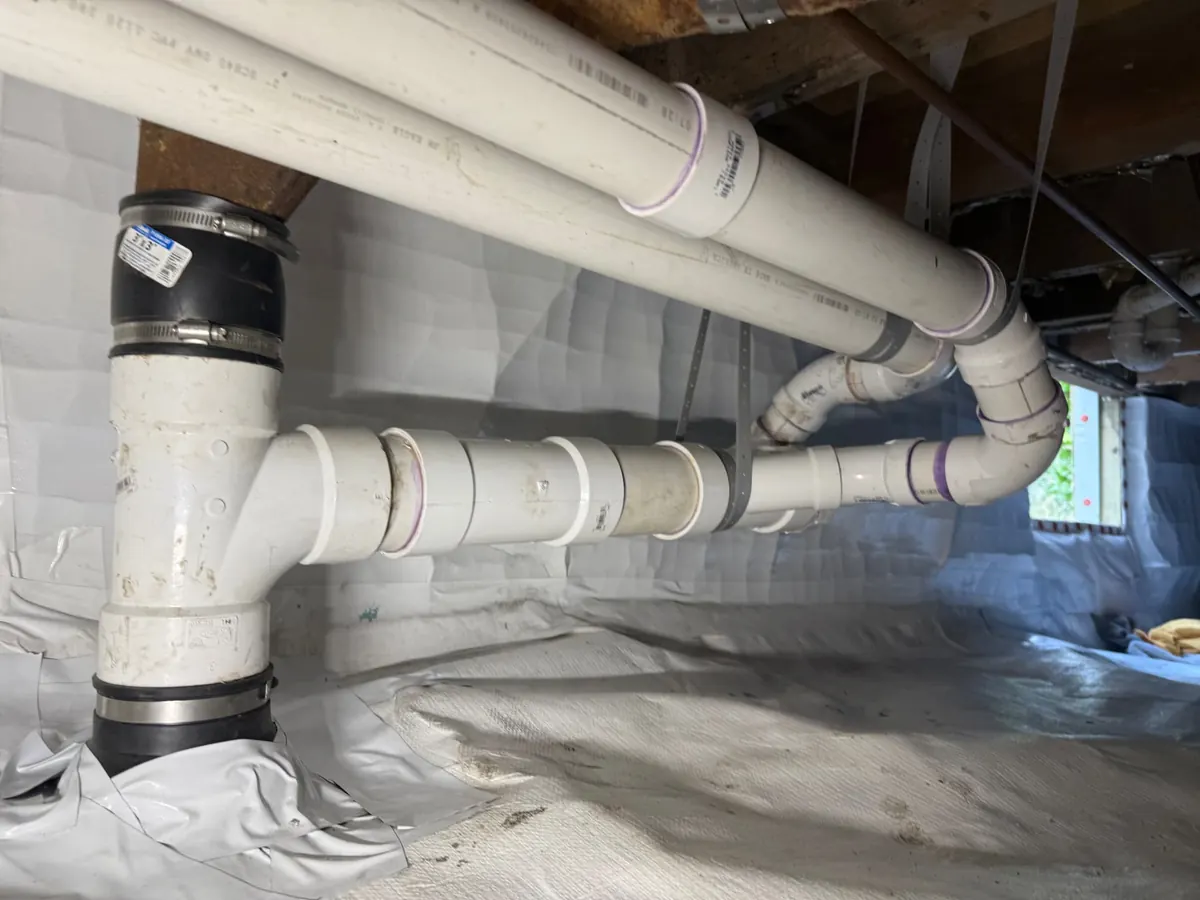
Supply-side work includes leak detection, copper and PEX repair, full repipes, pressure regulator replacement, and shutoff and valve upgrades. Drain-side work includes clearing, camera inspection of main lines, root intrusion diagnosis, and repair recommendations for failing cast iron and clay laterals.
Water heaters — tank and tankless — are a large share of our calls, both for failures and for planned replacement before a failure floods a finished space. We also install and replace sump pumps and battery backups, which is the single highest-value preventive item for any finished basement in this region.
Why older Maryland homes fail where they do
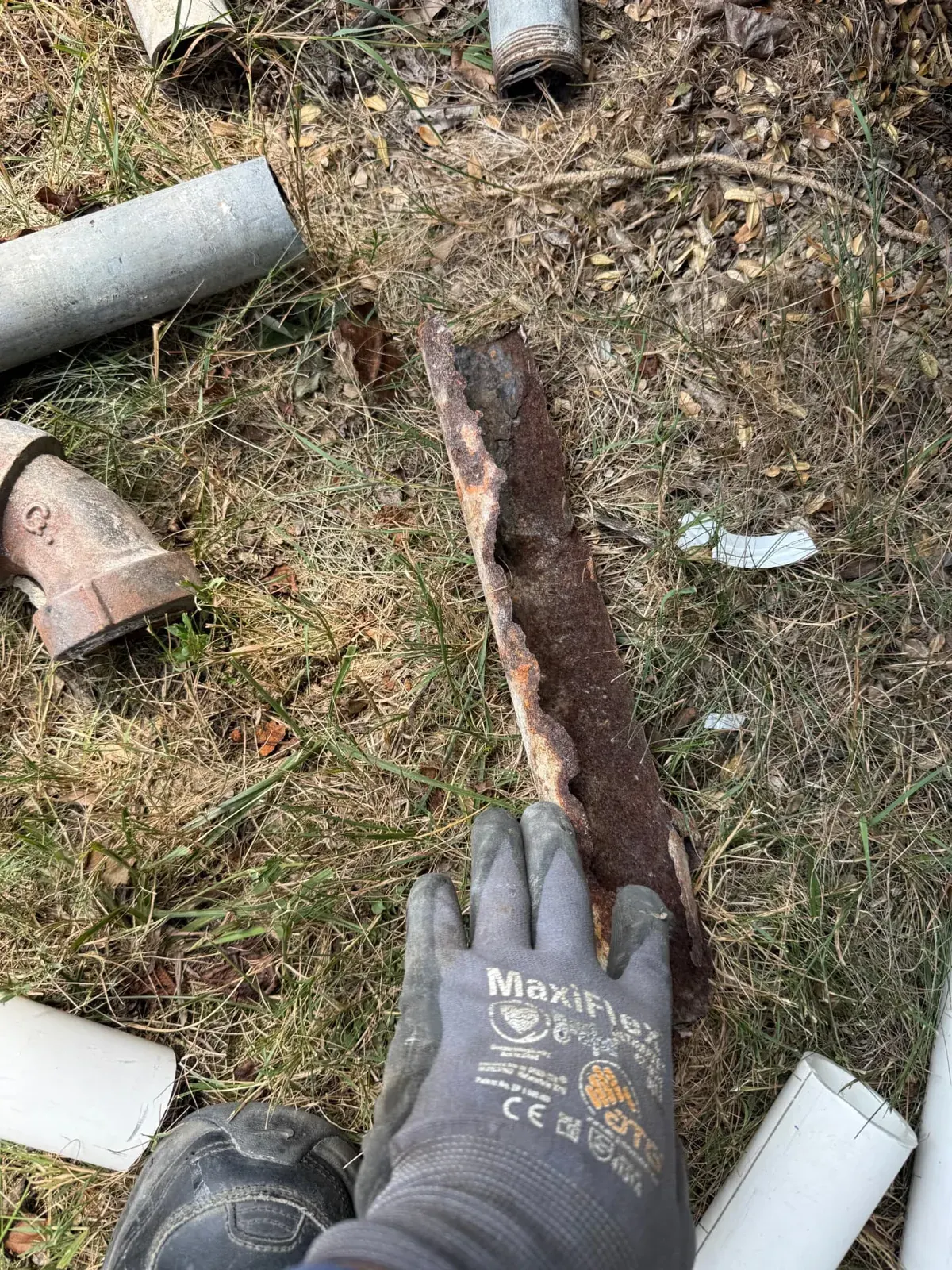
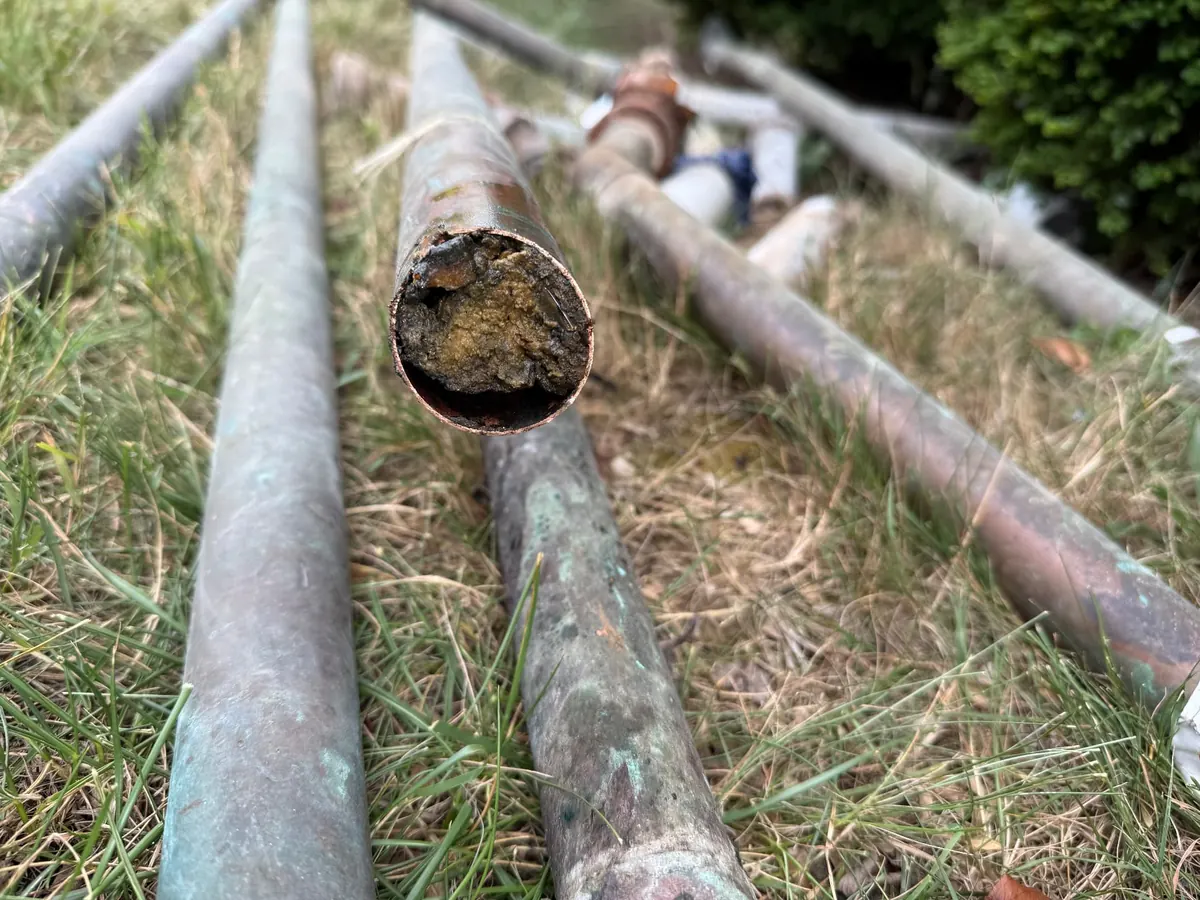
Housing stock built before the 1980s across Prince George's and Montgomery counties frequently still runs original galvanized supply lines or cast-iron waste lines. Both fail from the inside out. Galvanized corrodes inward until flow chokes off, so the first symptom is reduced pressure rather than a visible leak — and by then the pipe wall is thin enough to let go without warning. Cast iron scales and cracks along the bottom of the run, which shows up as a slow drain long before it shows up as a puddle.
Newer construction has its own pattern: polybutylene fittings, failing washing-machine supply hoses, and water heaters installed without a drain pan in a second-floor closet. We flag these during any service call, because the cheapest water damage claim is the one that never happens.
Preventive work worth doing
Braided stainless supply lines on every washing machine, dishwasher, and toilet. A labeled main shutoff every adult in the house knows how to find. A drain pan and leak sensor under any water heater above a finished space. Sump pump testing before spring and a battery backup if the basement is finished. Insulation on any supply line running through an unheated crawlspace, garage, or exterior wall.
None of that is expensive. All of it is cheaper than the mitigation, drying, and reconstruction that follows a failure — which is a claim we run several times every winter.