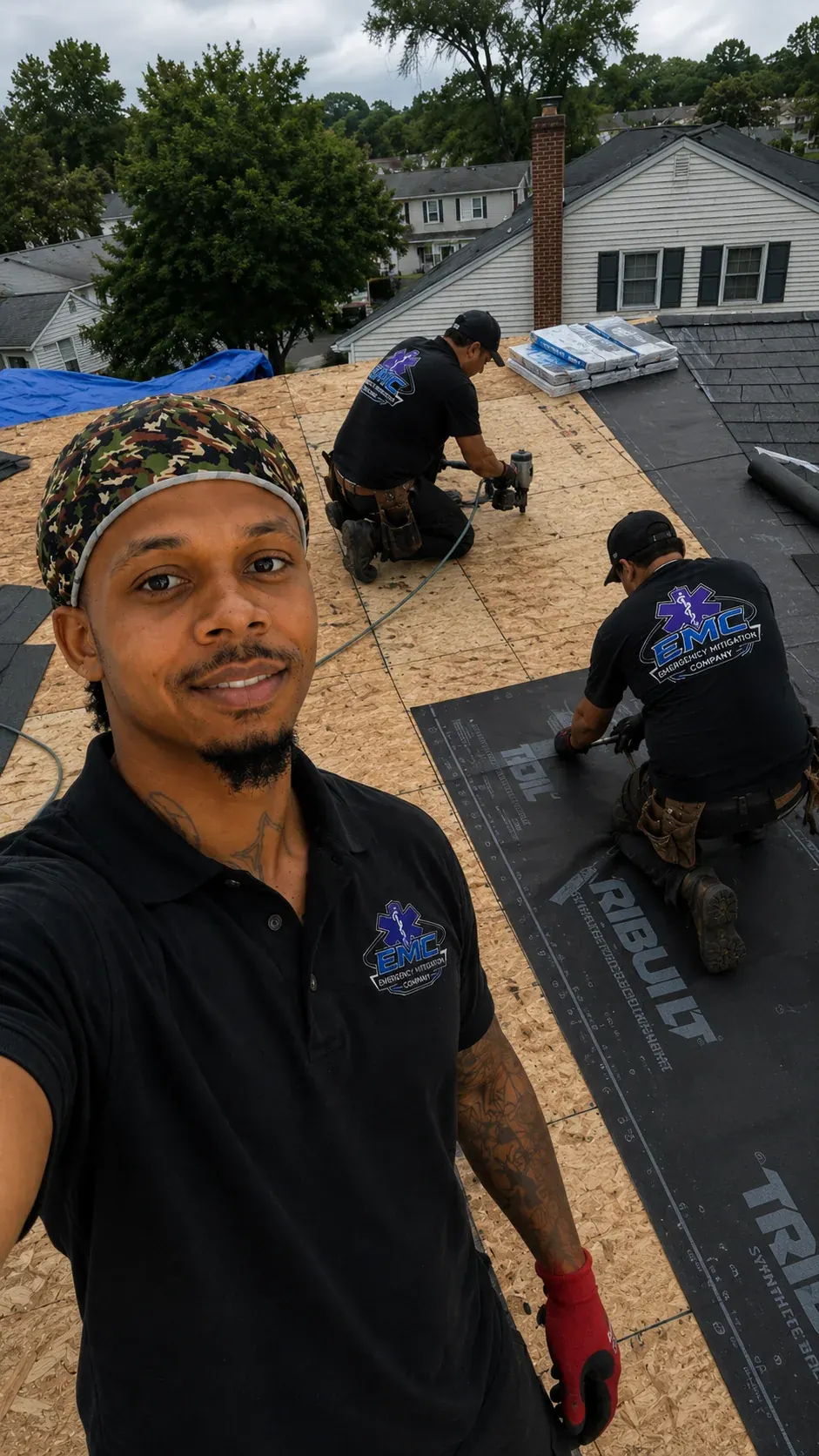
When a roof is past repair, EMC replaces it — full tear-off, deck inspection, and a proper install with manufacturer-backed materials. We handle storm-claim replacements and retail replacements across Maryland, DC, and Northern Virginia.
When replacement is the right call
A roof reaches the end of its life in one of two ways: gradually, as asphalt loses volatiles and shingles become brittle, or suddenly, when a hail or wind event damages enough of the field that spot repair can no longer restore it to pre-loss condition. Both outcomes end in replacement, but they are handled very differently — one is a retail project you plan for, the other is an insurance claim you need documented correctly.
The clearest signs a roof is done: granules filling the gutters, shingles that crack rather than flex when lifted, curling or cupping across whole slopes, multiple leak locations, exposed fiberglass mat, and daylight visible through the deck from the attic. If two or more of those are present, patching is money spent on borrowed time.
How EMC installs a roof
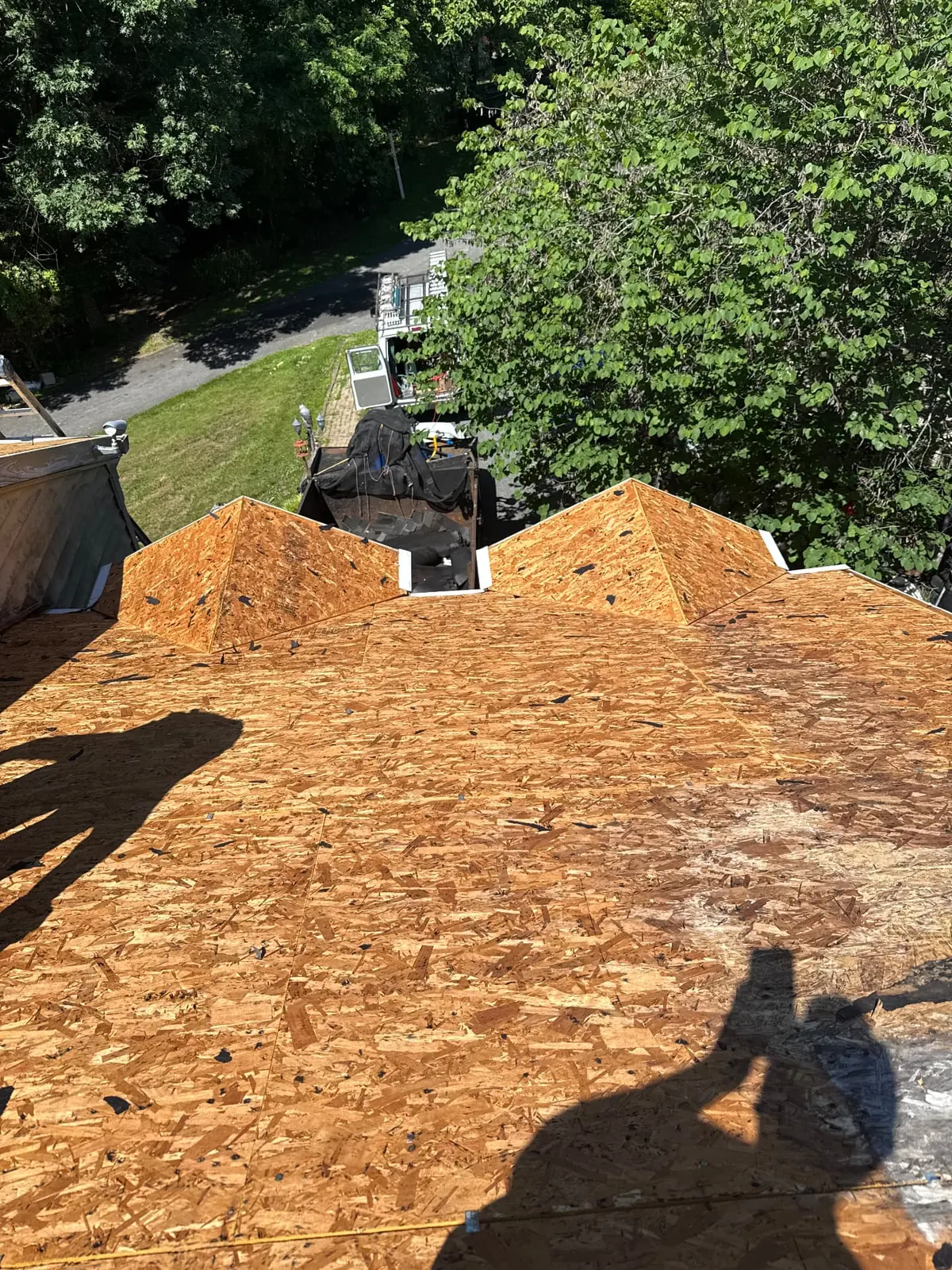
We tear off to the deck. Every layer comes off, which is the only way to see the sheathing you are about to cover for the next twenty-five years. Soft, delaminated, or rotted decking gets replaced and photographed before anything goes back on — so you know exactly what you paid for rather than taking it on faith.
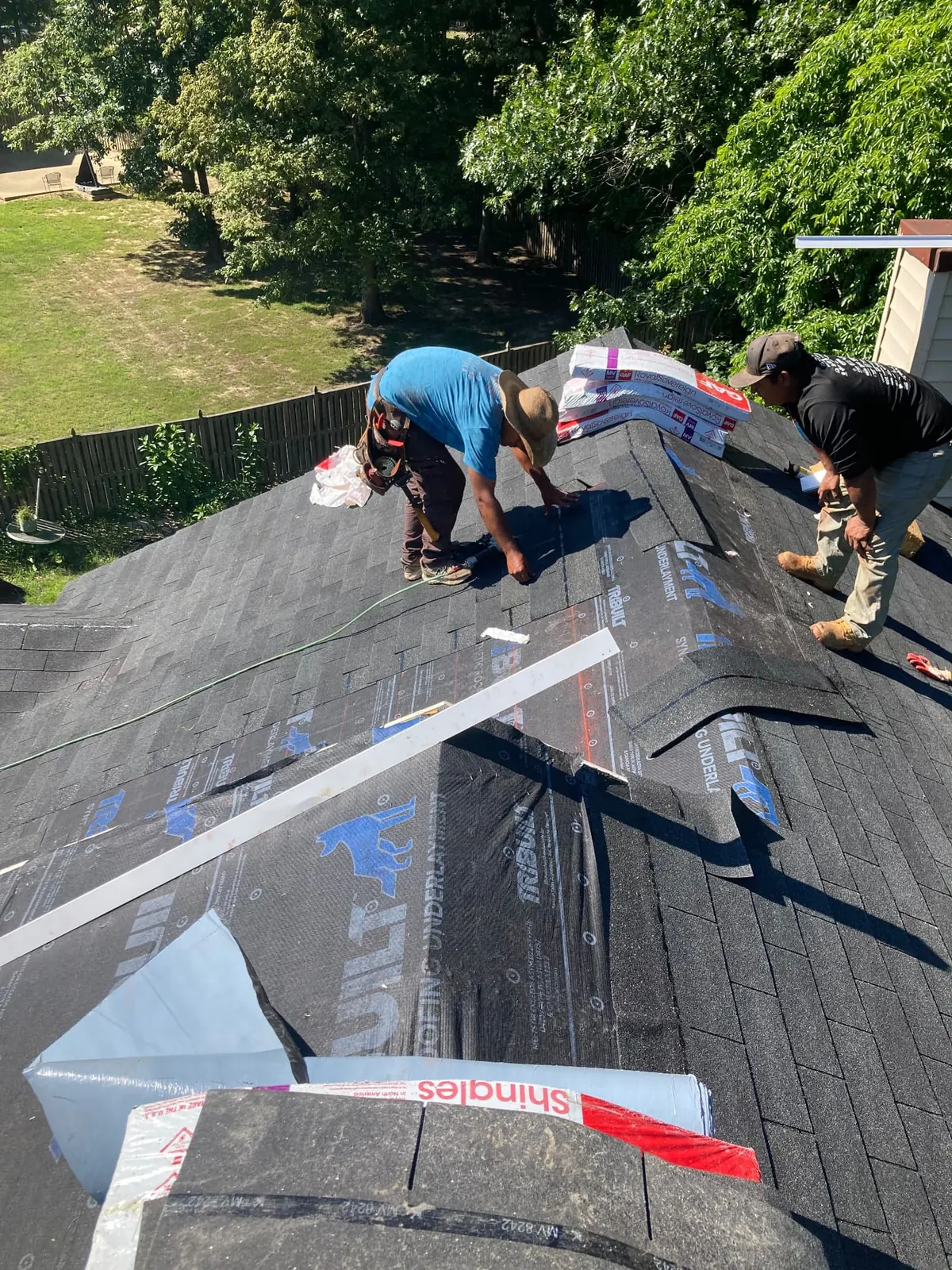
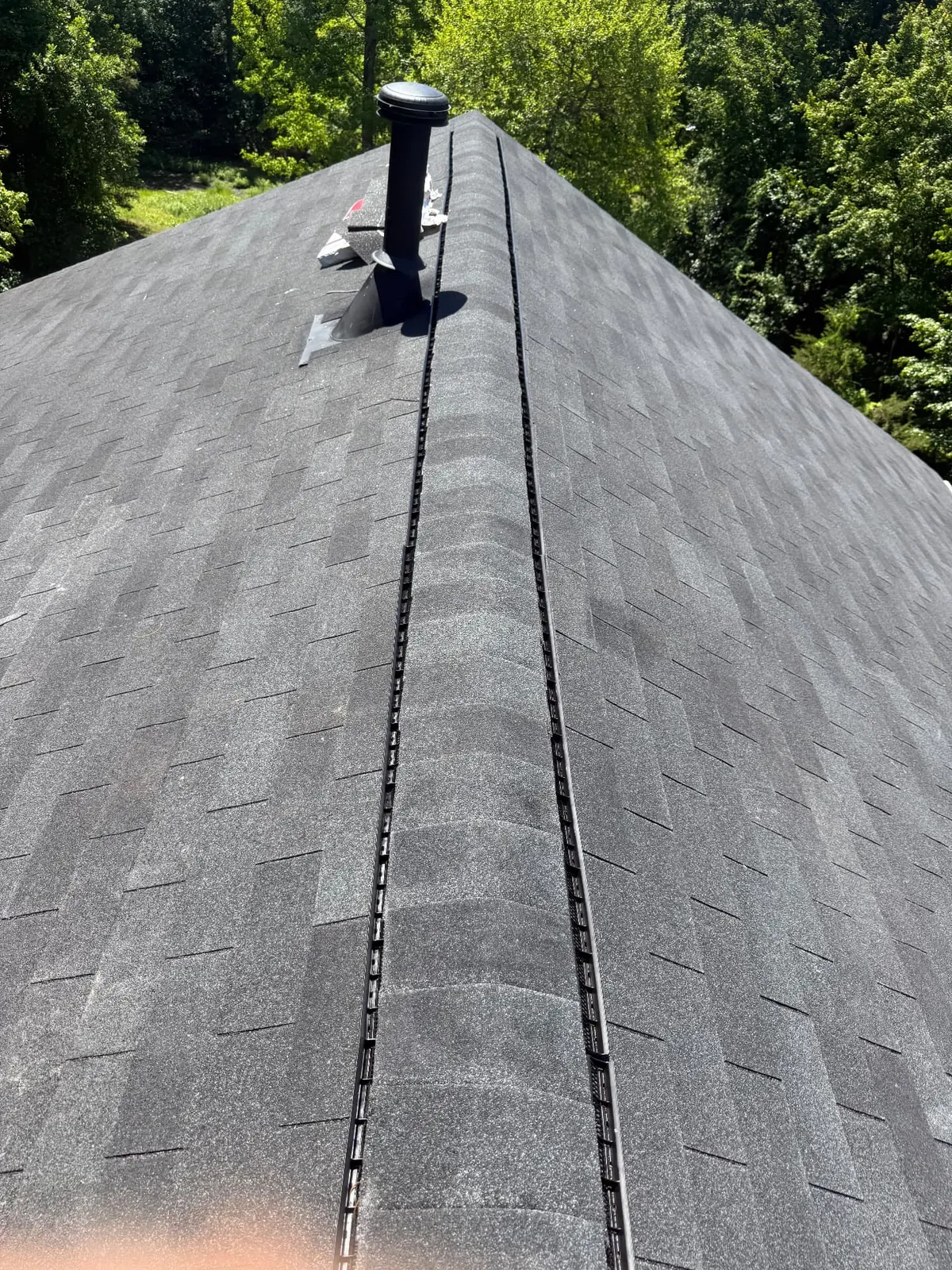
Then the system goes on in order: drip edge, ice-and-water shield at eaves, valleys, and every penetration, synthetic underlayment across the field, starter course, architectural shingles or metal panels, and ridge vent tied to adequate soffit intake. Ventilation is where most budget installs quietly fail — an under-vented attic bakes the underside of the deck and shortens the life of a brand-new roof by years.
Cleanup includes magnetic sweeps of the lawn, driveway, and beds. Landscaping and HVAC condensers are protected before tear-off begins, and we photograph the property before and after so there is no argument about pre-existing conditions.
Insurance-funded roof replacement
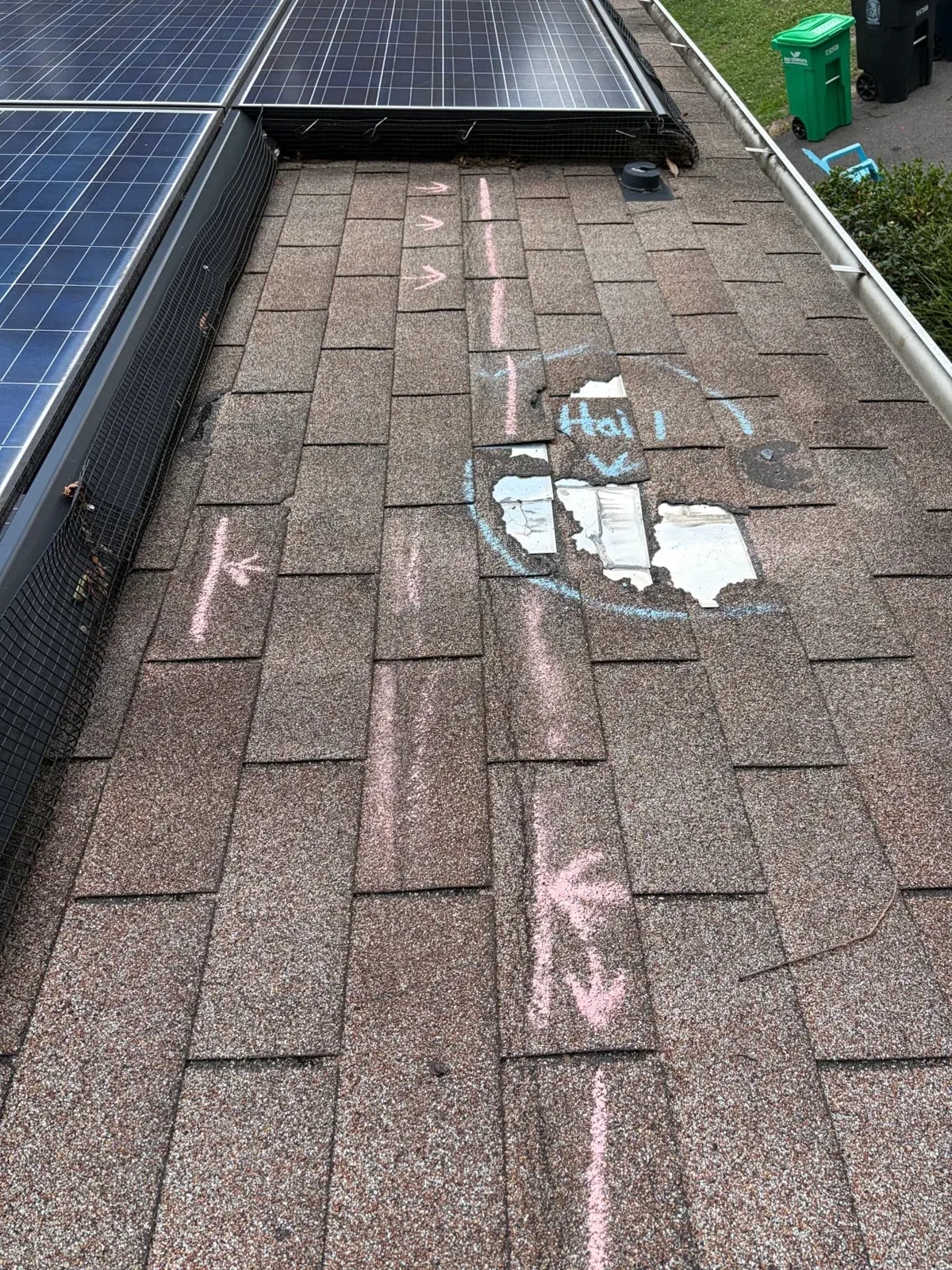
Carriers approve replacement when storm damage is widespread enough that repair cannot restore the roof to pre-loss condition. Whether you get there usually depends on documentation quality, not on how bad the roof looks from the ground. We photograph every test square, mark impact points with a scale reference, capture soft metals — gutters, downspouts, vents, and flashing — as corroborating evidence, and put the whole package in front of the adjuster before the inspection.
When the initial scope comes back short, we supplement. Missing code items, inadequate ventilation allowances, drip edge, ice-and-water shield, and steep or two-story access charges are the most common omissions. Supplementing is normal claim work — carriers expect it — but it only succeeds when the original documentation supports it.
Timeline and what to expect
Most single-family homes are torn off and dried in on the same day, with the full install complete in one to two days depending on square footage, pitch, number of penetrations, and weather. Larger or steeper homes and multi-family buildings run longer. We schedule around the forecast rather than starting a tear-off in front of a storm, and we never leave a deck exposed overnight.
EMC has been responding to Maryland storm losses since 2015. That means the crew replacing your roof is the same organization that handles the interior water damage if the leak already reached your ceilings — one scope, one documentation package, one point of contact for your carrier.