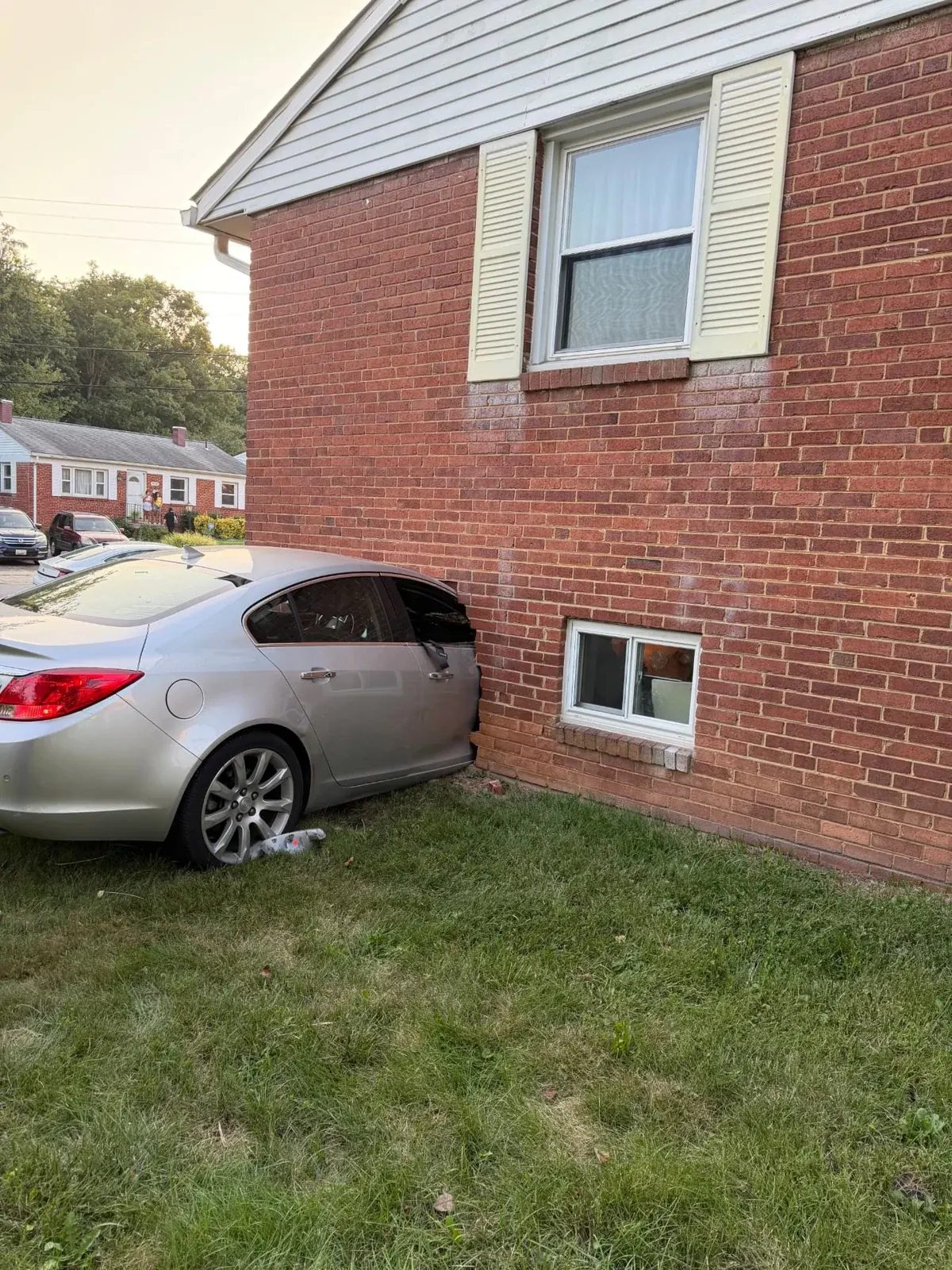
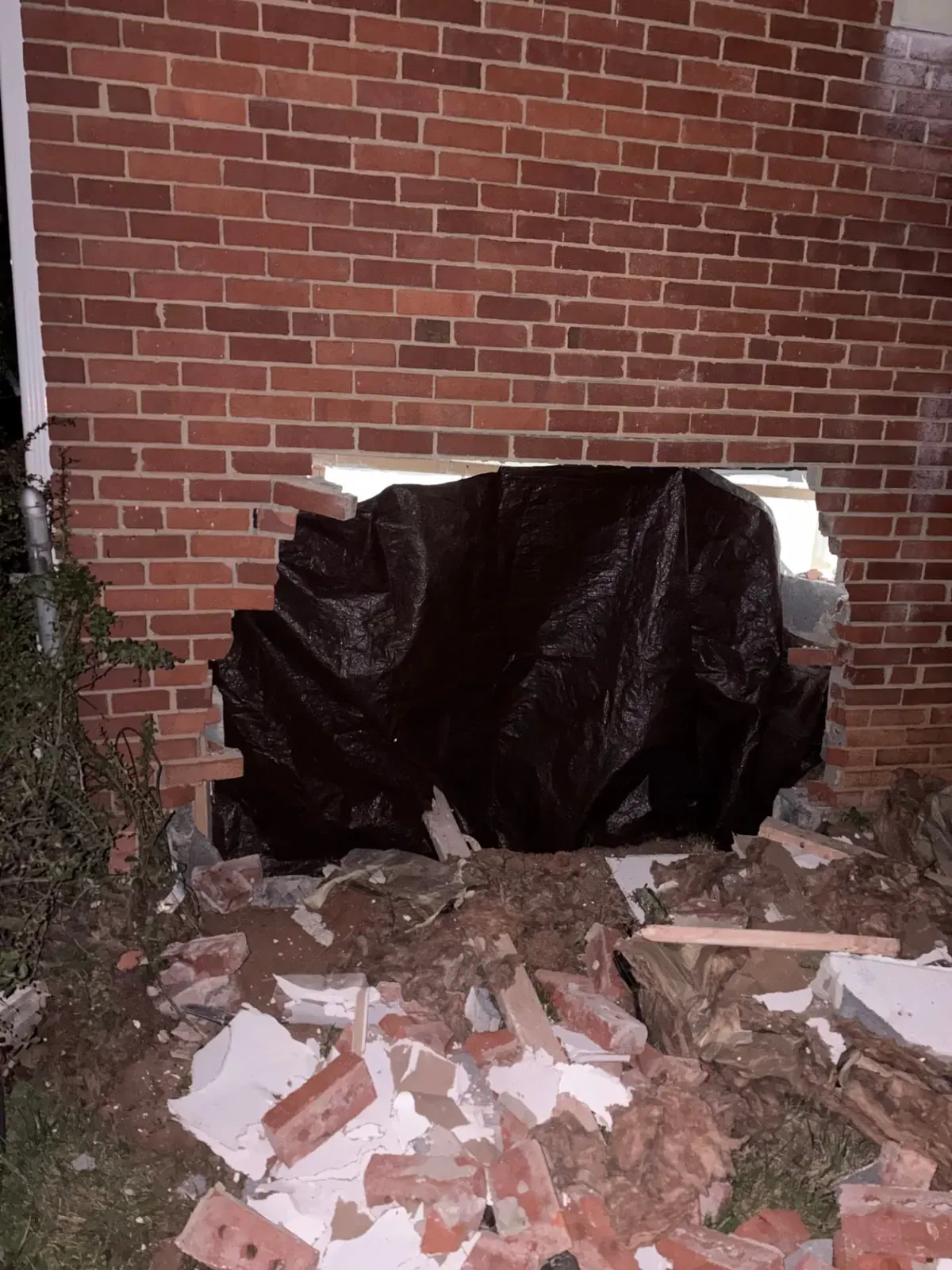
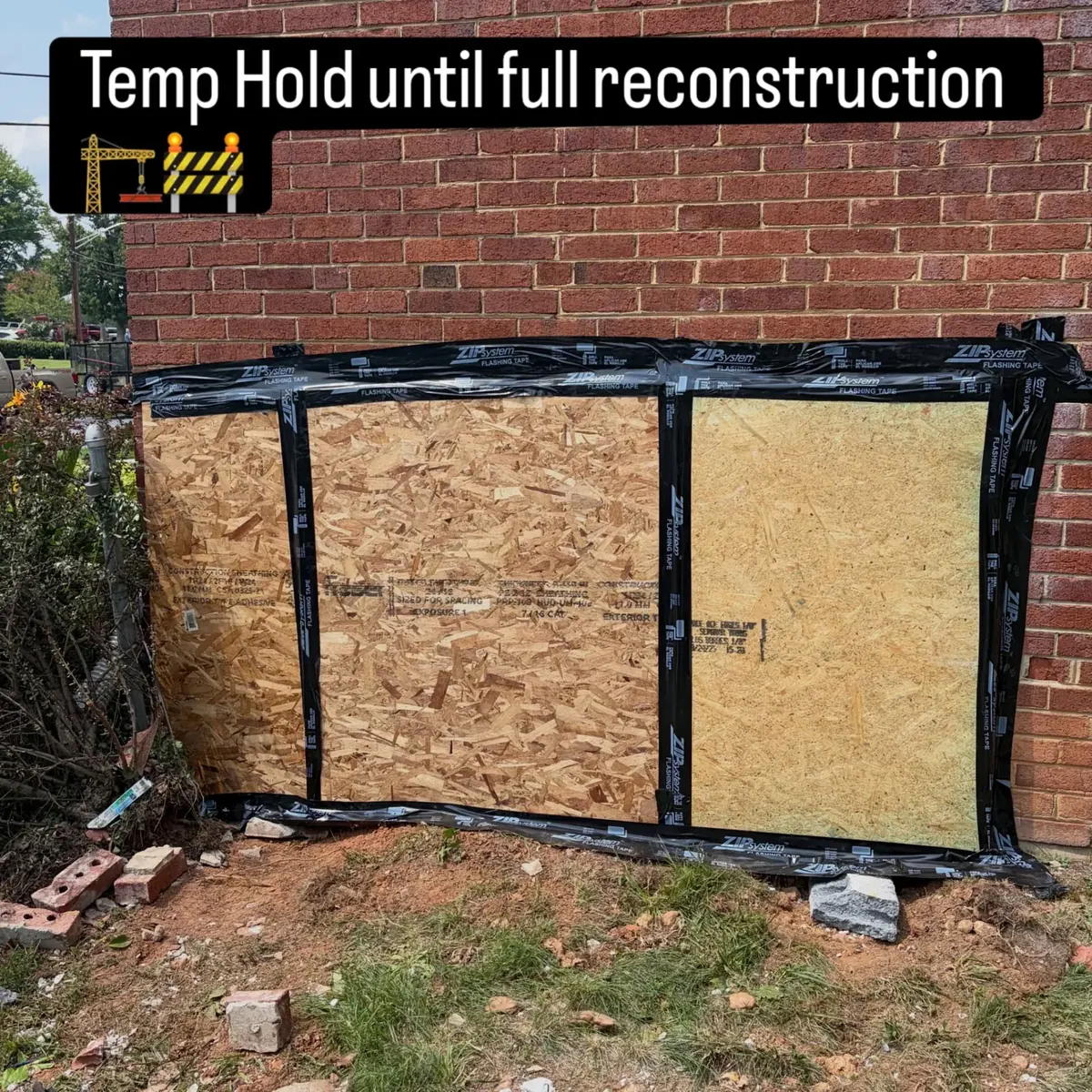
A car through a wall is a structural emergency with a security problem attached. EMC shores the opening, secures the building the same day, and manages a claim that involves two insurance companies instead of one.
More common than people expect
Vehicle-into-building calls are routine work in a dense suburban county. The pattern repeats: a driver mistakes the accelerator for the brake in a driveway or storefront lot, a car leaves a curve on a road like Branch Avenue or Route 301 and takes out a corner of a house, or a delivery truck backs into a garage or loading area. Commercial storefronts on busy corridors take the majority of them.
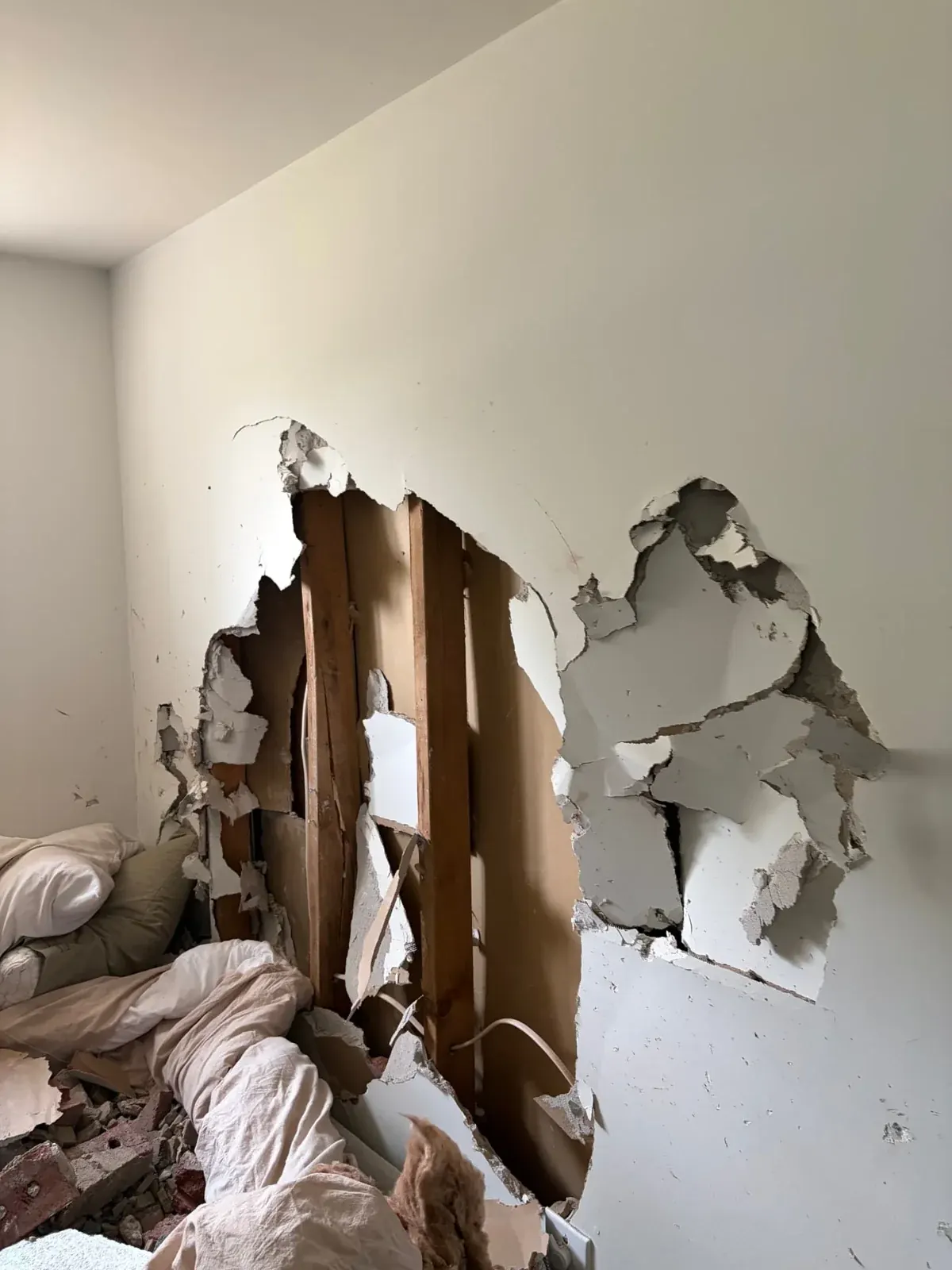
The damage almost always extends beyond the visible hole. Impact energy travels through framing, so headers over adjacent openings crack, floor joists shift, and masonry veneer separates from the sheathing several feet away from the strike. Anyone who scopes only the hole is scoping it wrong.
The first 24 hours
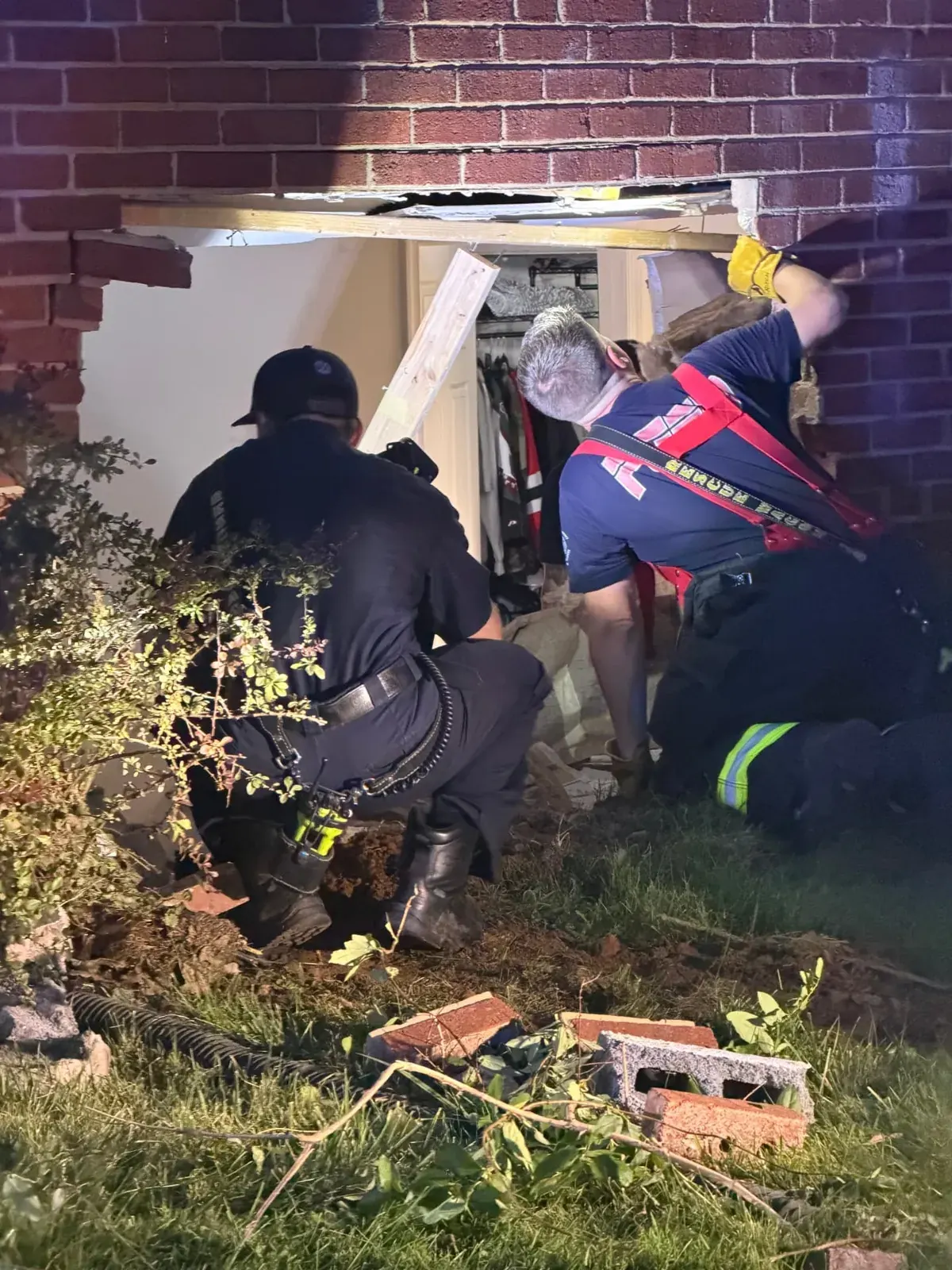
Shoring comes first. If the vehicle took out load-bearing framing, temporary posts and beams go in before anyone clears debris, and in serious cases we bring in a structural engineer. Then the building gets closed: plywood board-up over the opening with proper fastening, weather sealing, and a secure perimeter, because an open wall overnight is an insurance problem of a completely different kind.
We check whether the impact struck a gas line, water supply, or electrical service and get the utility shut down and out before anything else proceeds. For commercial properties we work around operating hours where possible so the business can reopen the unaffected portion quickly.
Two policies, one loss
Vehicle impact is a named peril on standard homeowner and commercial property policies, so your own insurance covers the damage and you pay your deductible. Separately, the driver's auto liability property-damage coverage is responsible for the harm they caused, and your carrier will typically subrogate against it to recover the payout — and, in many cases, refund your deductible once they collect.
Practical guidance: file with your own property carrier immediately rather than waiting on the driver's insurer to accept liability. Waiting adds weeks while your building sits damaged, and your policy requires you to mitigate promptly regardless of who was at fault. Get the police report number, the driver's insurance information, and photographs of the vehicle in place before it is towed. For commercial owners, business interruption coverage may also apply if the impact closes part of your operation.
Before we get there
Evacuate the affected area and keep people well away from any wall that took the hit — partial collapses often happen after the initial impact, not during it. Do not attempt to move the vehicle out of the structure; if it is holding a wall up, pulling it out is what brings the wall down.
Call 911, then call us. We dispatch emergency shoring and board-up 24/7 across Maryland, DC, and Northern Virginia.